
Search looks different from how it did two years ago. Type a question into Google and you will often see a written AI answer before any website appears. Plenty of people skip Google altogether and ask ChatGPT, Perplexity or Gemini instead.
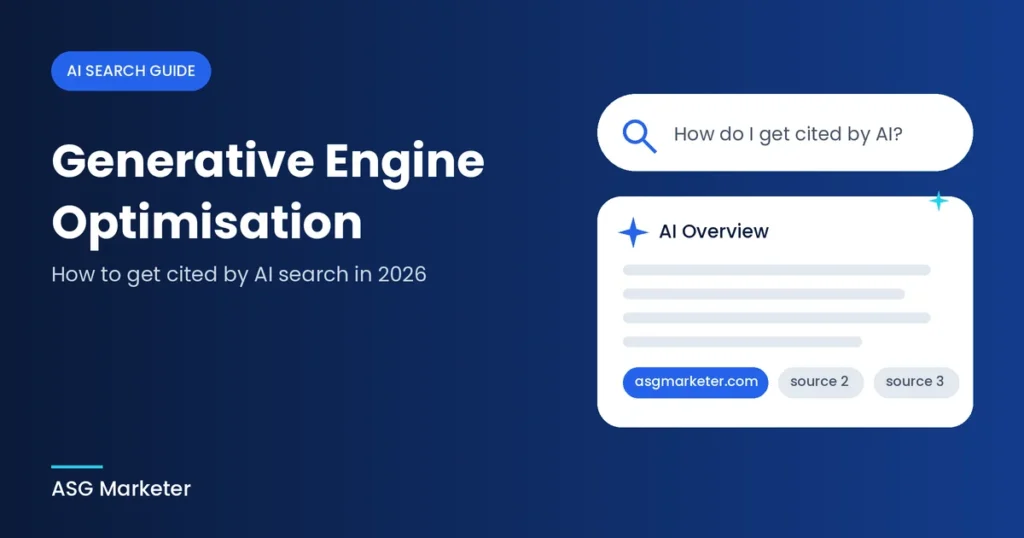
That shift has created a new discipline called generative engine optimisation, or GEO. If you run a website or manage a marketing team, it is worth understanding now, because the brands that get mentioned in AI answers are building a lead that will be hard to close later.
In this guide, we explain what GEO is, how it differs from traditional SEO, and the seven practical steps we use to make content easier for AI systems to read, trust and cite. We also cover how to measure results and the mistakes to avoid. If you are new to the wider picture, our SEO services [/seo-services] page gives a good overview of how GEO fits into a complete search strategy.
What Is Generative Engine Optimisation?
Generative engine optimisation is the practice of shaping your content so AI systems can understand it, trust it and mention it in their answers. You may also hear it called answer engine optimisation (AEO) or simply AI SEO. The labels vary, but the aim is the same: become a source the AI chooses to cite.
A generative engine is any tool that writes an answer instead of listing links. Google AI Overviews and AI Mode are the best-known examples, alongside ChatGPT search, Perplexity and Microsoft Copilot. Each one pulls information from web pages, combines it and presents a short response. GEO is about making sure your pages are among those it pulls from.
How Is GEO Different From Traditional SEO?
Traditional SEO aims to rank a page for a keyword so that people click through to it. GEO aims to get your information used inside an answer, often before anyone clicks at all.
The two overlap heavily. AI search tools still rely on the same web indexes that power normal search, so crawlability, site speed and quality content remain your foundation. Google’s own guidance on its generative AI features makes the same point: good optimisation is still about providing a good search experience. If your technical basics are weak, start with a technical SEO audit [/seo-audit] before worrying about anything else.
Where GEO differs is in emphasis. It rewards clear structure, direct answers, visible expertise and a wider reputation across the web. Rankings still matter, but being quoted matters too.
Why GEO Matters for Your Business
Three changes explain why this topic has moved from a niche interest to a priority for most marketing teams.
- AI Overviews are common. Industry studies report that they appear on roughly half of searches, and more often on informational queries.
- Clicks are shifting. When an AI answer appears, fewer people click the results beneath it. Being named inside the answer keeps your brand in front of them. Our guide to zero-click SEO [/blog/zero-click-seo] explains how to plan for this.
- Buyers research differently. Many now start with an AI tool and arrive on your site already informed, which means they are closer to a decision when they land.
Local businesses are affected too. AI answers draw on reviews and listings, so a well-kept Google Business Profile [/google-business-profile-optimisation] supports your visibility there as well.
7 Practical Ways to Optimise for AI Search
These are the steps we apply when preparing pages for AI search. None of them need special tools, and all of them improve the page for human readers too.
1. Answer the question first
Put a clear, direct answer in the first two or three sentences under each heading, then add detail afterwards. AI systems tend to lift passages that stand on their own, so each section should make sense even when read in isolation. A good test is to cover the rest of the page and ask whether that opening paragraph still answers the question. If it does not, rewrite it. Our content marketing service [/content-marketing] builds this habit into every article we produce.
2. Use clean, logical headings
Use a single H1, followed by H2 and H3 headings that mirror the questions people actually type. Avoid vague headings such as “The Big Picture” and write “How much does a website audit cost?” instead. Good structure helps readers scan the page and helps machines work out which part of your content answers which question. It also pairs well with solid keyword research [/keyword-research], because the questions you target should come from real search data.
3. Add an FAQ section with schema markup
Short question-and-answer blocks give search systems clear, self-contained units to read. Adding FAQ schema markup [/schema-markup-services] labels those blocks so they are easier to interpret. Keep answers to two or three sentences, and only mark up questions that genuinely appear on the page. Our guide to FAQ schema [/blog/faq-schema] covers the setup step by step, and our technical SEO team [/technical-seo] can implement it for you.
4. Show real expertise
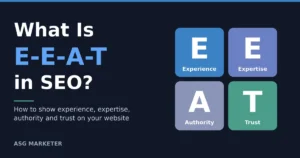
Include first-hand experience, worked examples, original data and a named author with a short biography. Content that shows it was written by someone who has done the work earns more trust than a generic summary. If you have client results, test findings or screenshots from your own campaigns, use them. These details are hard for competitors to copy and give AI systems something specific to cite.
5. Build authority beyond your site
AI systems look for signals that a source is credible, and much of that evidence lives off your website. Quality links, brand mentions, reviews and consistent business details all help. This is one reason backlinks have not lost their value. Our companion article, Link Building in 2026 [/blog/link-building-2026], explains how to earn them, and our backlink building service [/backlink-building] focuses on relevant, editorial links rather than volume.
6. Keep content fresh
Out-of-date advice is less likely to be cited. Review your most important pages every few months, update statistics, replace broken examples and add a visible “last updated” date. Refreshing an existing post is often faster and more effective than writing a new one. Our walkthrough on how to refresh old blog posts [/blog/refresh-old-blogs] shows what to check.
7. Cover topics in depth
AI systems often break one question into several related sub-questions before building an answer. A page that covers the full topic, including the follow-up questions, has more chances to be used. Plan topic clusters rather than isolated posts: one detailed main guide supported by shorter articles on each subtopic, all linked together. This also strengthens your internal linking, which helps both users and crawlers move through your site.
How to Measure AI Visibility
There is no single perfect metric yet, so combine several signals:
- Search Console: watch impressions and clicks for question-style queries, and compare them with the same pages before you made changes.
- Google Analytics: look for referral traffic from AI tools such as ChatGPT and Perplexity, and track it as its own segment.
- Manual checks: ask AI tools your target questions every month and record whether your brand or pages appear as a source.
- Brand search growth: a steady rise in people searching for your name often follows stronger visibility in AI answers.
Keep a simple log with the date, the question, the tool and the result. Over a few months, patterns appear. Our guide to tracking AI search visibility [/blog/ai-search-visibility-tracking] goes into more detail on each method.
Common GEO Mistakes
- Stuffing keywords or writing for machines. Clear, natural writing performs better with both readers and AI systems.
- Publishing thin AI-written content. If a page adds nothing that already exists elsewhere, there is little reason for anyone to cite it.
- Ignoring technical basics. Speed, mobile usability and crawlability still decide whether your pages can be used at all.
- Marking up content that is not on the page. Schema should describe what visitors can actually see. Anything else can cause errors.
- Expecting overnight results. GEO builds gradually, much like SEO.
Final Thoughts
GEO is not a replacement for SEO. It is the next layer on top of it. Write clear answers, show real expertise, structure your pages well and build trust across the web. Start with your most valuable pages, apply the seven steps above and measure what changes.
If you would like help adapting your site, explore our SEO services [/seo-services], request a free SEO audit [/seo-audit] or get in touch [/contact] with our team.
Frequently Asked Questions
1. What is generative engine optimisation in simple terms?
It is the practice of optimising your content so AI tools such as Google AI Overviews and chatbots can understand it and cite it in their answers. It builds on normal SEO rather than replacing it.
2. Is GEO replacing SEO?
No. AI search still relies on traditional search infrastructure, so SEO fundamentals remain essential. GEO adds a focus on clear answers, structure and authority. Our SEO services [/seo-services] cover both.
3. How do I get my website into Google AI Overviews?
Publish helpful, well-structured content that answers questions directly, show real expertise, use schema markup and earn quality mentions and links. There is no guarantee of inclusion, but these steps improve your chances.
4. Does schema markup help with AI search?
It helps search systems understand your content more clearly. It does not guarantee inclusion, but it supports eligibility and clarity. Our technical SEO [/technical-seo] team can check your current markup.
5. How can I track whether AI tools mention my brand?
Check referral traffic in Google Analytics, monitor Search Console and regularly test your key questions in AI tools to see which sources they cite. Record the results monthly so you can spot trends.