
Ask ten marketers how to rank in 2026 and at least half will mention E-E-A-T. It is one of the most repeated terms in SEO, yet it is also one of the most misunderstood. Is it a ranking factor? A score? A checklist? The honest answer is more practical than most articles suggest.
This guide explains what E-E-A-T means, what Google actually says about it and the steps you can take to show real experience and trust on your website. E-E-A-T is a key part of on-page SEO, so it is a good place to start if you are improving your content.
What Does E-E-A-T Stand For?
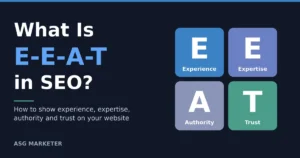
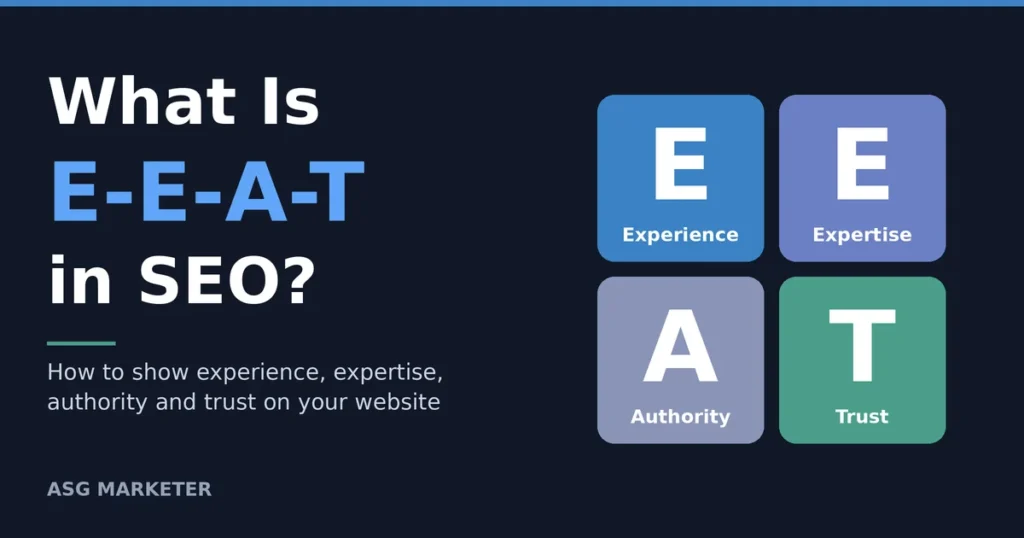
E-E-A-T stands for Experience, Expertise, Authoritativeness and Trustworthiness. Google added the first E for Experience in December 2022, building on the older E-A-T idea found in its Search Quality Rater Guidelines. These guidelines are used by human reviewers who help Google test how well its search systems perform.
| Letter | Meaning | What it looks like on a website |
|---|---|---|
| Experience | First-hand knowledge of the topic | Original photos, real examples, personal lessons and project notes |
| Expertise | Skill and knowledge in the subject | Accurate detail, qualified authors and clear explanations |
| Authoritativeness | Being known as a go-to source | Mentions, links and citations from respected websites |
| Trustworthiness | Being honest, accurate and safe | Contact details, clear policies, a secure site and sourced facts |
Is E-E-A-T a Ranking Factor?
Not directly. Google has explained that E-E-A-T is not a single ranking factor or a score that you can measure. It is a framework that reflects what Google’s systems try to reward: helpful, reliable content made for people. Of the four parts, Google says trust is the most important, and the other three support it. Think of E-E-A-T as a quality standard to aim for rather than a button to press.
Why E-E-A-T Matters More for Some Topics
Google pays extra attention to subjects that could affect a person’s health, finances, safety or well-being. It calls these Your Money or Your Life topics. A weak article about a pasta recipe is a small problem. A weak article about medicine, tax or legal rights can cause real harm. If your business works in finance, healthcare, law or real estate, which are all strong sectors in Dubai and across the UAE, the standard of proof is higher.
How to Show E-E-A-T on Your Website
Show real experience
Share things only someone who has done the work would know. Use your own screenshots, project photos, test results and lessons from mistakes. Generic advice that could have been copied from any other site shows very little experience.
Make authors visible
Add a named author to each article, with a short biography, relevant qualifications and links to professional profiles. Create an author page that lists their work. Readers and search systems can then see who stands behind the content.
A strong author bio is short and specific. It names the person, states their role and years in the field, mentions relevant qualifications or past projects, and links to a LinkedIn profile or portfolio. A line such as “written by a technical SEO specialist with hands-on experience in WordPress audits” tells readers far more than a vague job title.
Back up claims with sources
Link to original studies, official guidelines and recognised publications. Avoid vague statements such as “experts say”. If you quote a statistic, say where it came from and when it was published.
Build clear trust signals
Display your business name, address, phone number and email. Publish clear privacy and refund policies. Use HTTPS, avoid intrusive pop-ups and respond to reviews honestly.
Earn authority beyond your own site
Mentions in industry publications, speaking invitations, podcast interviews, partnerships and quality backlinks show that others consider you credible. Authority is earned by what other people say about you, not by what you say about yourself.
Keep content fresh and accurate
Review your most important pages once or twice a year. Update facts, remove outdated advice and show the last updated date so visitors know the information is current.
E-E-A-T and AI Search
AI answer tools such as Google’s AI features, ChatGPT and Perplexity tend to rely on pages that look reliable. Clear authorship, original information and consistent brand details across the web all make it easier for these systems to trust and cite you. Strong E-E-A-T work therefore supports your visibility in traditional search and in AI-generated answers at the same time.
How Long Does It Take to See Results?
E-E-A-T work is gradual. Updating an author bio or adding sources can be done in a day, but trust builds over months as more people read, cite and mention your content. Expect to see improvements in engagement, branded searches and mentions before you see ranking changes. Track progress in Google Search Console, and avoid judging the results after only a few weeks.
Common E-E-A-T Mistakes
- Publishing AI-written text with no human review or real insight.
- Using fake author names or stock photos in place of the real team.
- Copying competitor outlines without adding new information.
- Hiding contact details or ownership information.
- Claiming awards or certifications that you cannot prove.
A Simple E-E-A-T Checklist
- Does every article have a real, named author?
- Does the page include first-hand details such as photos, examples or data?
- Are the main claims linked to reliable sources?
- Can a visitor find your contact details in one click?
- Have you reviewed the page in the last twelve months?
- Do trusted third-party websites mention or link to your brand?
Frequently Asked Questions
What does E-E-A-T mean in SEO?
It stands for Experience, Expertise, Authoritativeness and Trustworthiness. It is a set of quality ideas that Google uses to describe helpful, reliable content.
Is E-E-A-T a direct ranking factor?
No. Google has said it is not a single score or ranking factor. It guides how Google’s systems and human raters judge content quality.
How can a new website show E-E-A-T?
Start with transparency. Name your team, explain your background, publish accurate content based on real work and collect honest client reviews. Authority takes time, but experience and trust can be shown from day one.
Does E-E-A-T apply to every type of website?
Yes, but the bar is higher for topics that affect health, money or safety. Even a small local business site benefits from clear contact details and honest information, and it pairs well with local SEO.
Can AI-generated content show E-E-A-T?
AI can help with drafts, but it cannot supply real experience. Content needs human review, accurate facts, original insight and a named person who takes responsibility for it.
Final Thoughts
E-E-A-T is not a trick or a plugin. It is a habit of publishing honest, well-sourced content from people who know the subject, and showing clearly who they are. Start with your most important pages, add real authors and evidence, and build from there. If you want an expert review of your content and trust signals, ASG Marketer can help you plan the next steps through an SEO audit. Get in touch to get started.