
With AI answers appearing at the top of search results, some people claim that link building is dead. It is not. It has changed. The tactics that worked in the past, such as buying cheap links or posting on any site that accepts guest articles, are fading. What replaces them is quality, relevance and reputation.
In this guide, we explain why backlinks still matter, what a high-quality link looks like in 2026 and six strategies that work today. We also cover anchor text, internal linking, the mistakes to avoid and a simple way to track progress. If you are also adapting to AI search, read our companion article on generative engine optimisation , because the two work best together.
Do Backlinks Still Matter?
Yes. Backlinks remain one of the clearest signals that other sites trust yours. Search engines have used links this way for over two decades, and that has not changed. AI systems also tend to draw from sources that look credible and well established, and links and mentions are part of how that credibility is built. Some industry analyses suggest that AI-generated answers lean towards sites with stronger authority.
There is a nuance worth stating. A few relevant, respected links beat hundreds of weak ones. Brand mentions, even without a link, now matter alongside links because they help systems recognise your business as a real name in its field. A balanced approach covers both, and our backlink building service is designed around that idea.
How Has Link Building Changed?
A few years ago, many sites could grow on volume alone. Today, search systems are better at spotting patterns that look artificial, such as sudden spikes of links from unrelated sites or repeated exact-match anchors. Meanwhile, the value of a link from a respected, relevant publication has risen.
The shift is simple: earn links by being worth citing, rather than asking for them by default. That starts with strong content. If your pages are thin, even good outreach will struggle, so review your content marketing before you start contacting anyone.
What Makes a High-Quality Backlink in 2026?
- Relevance: the linking site covers your industry or a closely related topic. A link to a plumbing company from a home improvement blog carries more weight than one from an unrelated gadget site.
- Trust: the site has a genuine audience, publishes regularly and has a clean reputation.
- Editorial context: the link appears naturally inside useful content, not in a footer or a list of paid links.
- Traffic potential: real people can click it and arrive on your site. A link that nobody could ever find has limited value.
- Natural anchor text: the clickable wording looks organic and describes the destination, rather than repeating a target keyword.
Before you pursue any link, ask a simple question: would we want this link if search engines did not exist? If the answer is yes, it is usually a good one. A backlink audit [/seo-audit] can help you apply this test to your existing profile.
Link Building Strategies That Work Now
The six approaches below suit most businesses, and they work best when combined. Pick two or three to begin with, then add more as your process matures.
1. Digital PR and expert commentary
Share original opinions or data with journalists and bloggers who cover your sector. Journalists often need quick expert quotes, and a useful comment can earn a link from a respected publication. Keep your pitch short, specific and tied to something already in the news. Over time, these mentions build both links and brand recognition, which also supports your visibility in AI answers.
2. Original research and data
A small survey, benchmark or case study gives people something worth citing. You do not need a large budget. Ten client results, a poll of your email list or an analysis of your own campaign data can be enough if the findings are clear. Original data is also more likely to be used by AI answers, because it cannot be found anywhere else. Publish the results on a dedicated page and make the key figures easy to quote.
3. Guest posting on relevant sites
Guest posting is still effective when you write something genuinely useful for a respected blog in your field. Offer a topic the site has not covered, write it to the same standard as your own best work and include one natural link back to a relevant page. Skip sites that publish anything for a fee, because those links add risk without adding value.
4. Resource page and broken link outreach
Suggest your helpful guide to sites that list resources on your topic, or offer it as a replacement for a dead link. You can find these pages by searching for phrases such as “useful resources” alongside your subject, or by using a crawler to find broken outbound links. Our guide to generative engine optimisation [/blog/generative-engine-optimisation] is the kind of resource that fits well here, because it is practical, current and easy to reference.
5. Niche directories and communities
Choose industry-specific listings and active communities where your audience already spends time. Relevance beats volume. For local businesses, consistent listings and citations are a useful starting point, and they work alongside a strong local SEO [/local-seo] setup and an optimised Google Business Profile [/google-business-profile-optimisation].
6. Unlinked brand mentions
Find places that mention your brand without linking to it, then politely ask the author to add a link. It is one of the easiest wins available, because the writer already knows and values your business. Set up alerts for your brand name and review them weekly so that you can respond while the article is still fresh.
Anchor Text: Keep It Natural
Mix your anchors: branded (“ASG Marketer”), partial match (“tips for building backlinks”), generic (“this guide”) and a small amount of exact match. A natural profile usually has far more branded and generic anchors than exact-match ones. Heavy exact-match anchoring can look manipulative and may attract unwanted attention.
The same thinking applies to links between your own pages. Use descriptive anchors that tell readers what to expect, such as our technical SEO guide [/blog/technical-seo-guide], instead of “click here”.
Internal Links Support Your Backlinks
External links bring authority to your site, and internal links share it. When a page earns a strong backlink, linking from that page to related pages passes some of that value along and helps crawlers find them.
- Link your newest content from older posts that already attract visitors and links.
- Connect each key service page, such as SEO services [/seo-services], to the guides that support it.
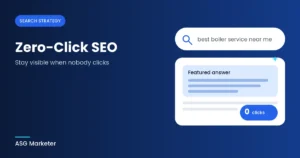
- Link related articles to one another, for example from this post to our guide on zero-click SEO [/blog/zero-click-seo].
- Review internal links whenever you publish, and fix any that point to redirected or removed pages.
What to Avoid
- Paid link schemes and private blog networks. They break search engine guidelines and can lead to penalties.
- Mass comment or directory spam. These links carry little value and make your profile look careless.
- Irrelevant sites with no real audience. A link from a site that nobody visits does little for you.
- Automated tools that promise instant links. Genuine editorial links take time to earn.
- Ignoring your existing profile. Old, low-quality links should be reviewed before you build new ones.
How to Track Your Progress
Keep a simple sheet with these columns: site, link URL, anchor text, date acquired and status. Each month, check whether your links are still live, which ones send referral traffic and whether your brand mentions are growing. Google Search Console shows which sites link to you most, and Google Analytics shows which links send visitors who go on to take action.
Compare your results with the pages already ranking for your main keywords. If competitors have a stronger profile, set a realistic target for the number of quality links to earn each quarter. For a professional review, see our SEO audit service [/seo-audit].
Final Thoughts
Link building in 2026 is less about volume and more about earning trust. Create content worth referencing, build real relationships and keep your profile natural. Combine that with clear, well-structured pages and your site becomes a stronger candidate for both traditional rankings and AI citations.
Ready for a stronger link profile? Talk to our team or explore our backlink building services.
Frequently Asked Questions
1. Do backlinks still matter with AI Overviews?
Yes. They remain a strong trust signal, and credible sites are more likely to be used as sources in AI-generated answers. Our guide to generative engine optimisation explains how the two connect.
2. How many backlinks do I need?
There is no fixed number. Compare your link profile with the pages already ranking for your target keyword and aim to close the quality gap.
3. Are brand mentions without links useful?
Yes. Mentions help build recognition and authority, and you can often convert them into links by asking politely.
4. How long does link building take to work?
Usually a few weeks to a few months, depending on the quality of the links and how quickly search engines crawl them. Our SEO services include monthly progress reporting.
5. Can bad backlinks hurt my website?
Yes. Spammy or manipulative links can cause problems. Review your profile regularly and disavow clearly harmful links if needed. A backlink audit is a good place to start.