
Yes, you can do SEO on your own, even if you are a beginner. Search engine optimization (SEO) is a process of improving your website so that it can appear in search engine results and attract relevant visitors. You do not need to be an expert or hire an agency to start learning SEO. With the right knowledge, tools, and consistent effort, you can improve your website’s visibility over time.
Whether you have a business website, blog, or online store, learning SEO can help you understand how search engines work and how people find information online.
In this beginner’s guide, we will explain how to do SEO yourself, which areas to focus on, and how to start improving your website.
What Is SEO?
SEO stands for Search Engine Optimization. It involves improving different parts of a website to help search engines understand its content and make it easier for users to find.
For example, if you have a website that offers web development services, you may want your website to appear when someone searches for “web development services.” SEO helps you optimize your pages around relevant topics and keywords.
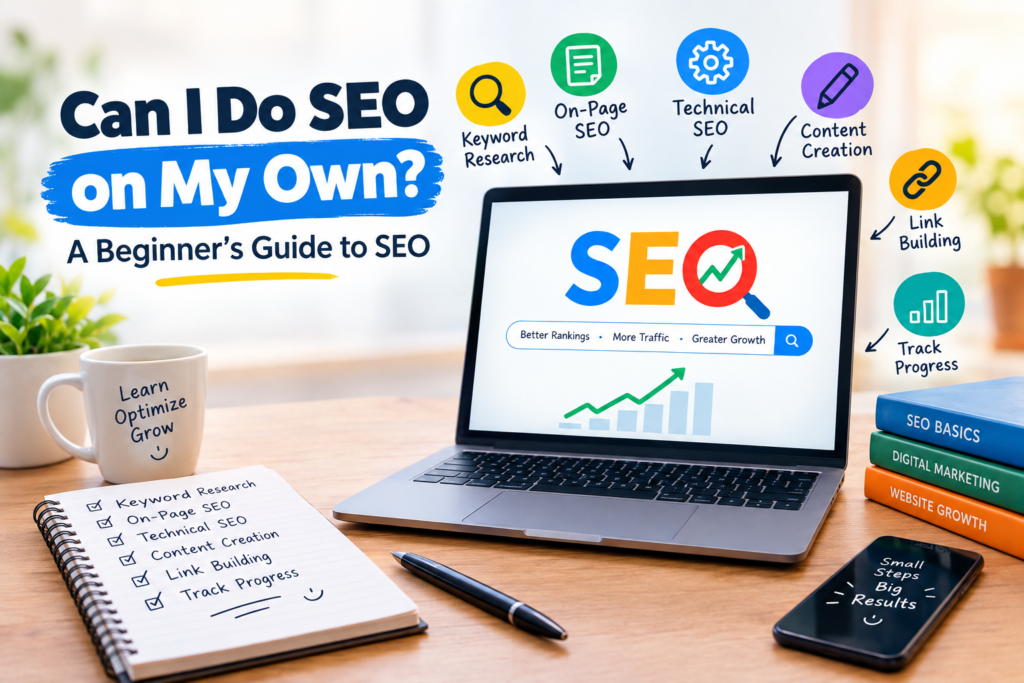
SEO generally includes:
- Keyword research
- On-page SEO
- Technical SEO
- Content creation
- Link building
- Website performance optimization
The goal is to create a website that is useful for visitors and easy for search engines to understand.
Can I Do SEO on My Own?
Yes, beginners can perform many SEO tasks themselves. You can start with basic keyword research, optimize page titles, improve content, and check your website’s technical health.
However, SEO requires patience and continuous learning. Results depend on factors such as competition, website quality, content relevance, Asg Marketer and how long your website has been active.
If you are working with a small website, learning SEO yourself can be a practical way to understand digital marketing and improve your online presence.
How to Do SEO on Your Own
1. Learn the Basics of SEO
Before making changes to your website, understand the basic SEO concepts. Learn how search engines discover, crawl, index, and rank web pages.
You should become familiar with:
- Search engine crawling and indexing
- Keywords and search intent
- Page titles and meta descriptions
- Internal and external links
- Website speed and mobile usability
- Search engine results pages (SERPs)
Understanding these concepts will help you make better decisions when optimizing your website.
2. Perform Keyword Research
Keyword research is one of the most important parts of SEO. It helps you discover what people search for on Google and other search engines.
For example, if your website is about software downloads, relevant keywords may include:
- Free software download for PC
- Best software for Windows
- Download software for Windows 11
- Software installation guide
Choose keywords that match your website’s content and the information users are looking for.
You can use tools such as Google Keyword Planner, Google Search Console, and other keyword research platforms to find keyword ideas and understand search demand.
Beginners should focus on relevant keywords with realistic competition instead of targeting only highly competitive terms.
3. Optimize Your Page Titles and Meta Descriptions
Page titles and meta descriptions help describe your webpages in search results.
A good SEO title should be clear, relevant, and include your primary keyword naturally.
For example:
Poor Title: Home – My Website
Better Title: Affordable Web Development Services for Businesses
Your meta description should briefly explain what the page offers and encourage users to visit.
Example:
“Explore professional web development services designed to help businesses build fast, user-friendly, and responsive websites.”
Write unique titles and descriptions for important pages on your website.
4. Create Helpful and Informational Content
Content is an important part of SEO because it helps answer users’ questions and provides information about your products or services.
When creating content:
- Write for your target audience.
- Use your primary keyword naturally.
- Add related keywords where relevant.
- Use headings and short paragraphs.
- Answer common user questions.
- Keep information accurate and useful.
For example, if your target keyword is “Can I do SEO on my own?”, your article should explain the steps beginners can follow rather than simply repeating the keyword.
You can also publish blog posts, tutorials, guides, and FAQs to cover topics related to your website.
5. Improve Your Website’s Technical SEO
Technical SEO focuses on how your website works and how search engines access its pages.
Some basic technical SEO tasks include:
Check your sitemap: A sitemap helps search engines discover important URLs on your website.
Review robots.txt: This file provides crawling instructions to search engine bots.
Fix broken links: Broken links can create a poor user experience and may prevent visitors from reaching useful pages.
Use mobile-friendly design: Your website should work properly on smartphones and tablets.
Improve page speed: Optimize large images, reduce unnecessary scripts, and use reliable hosting.
Check indexing: Use Google Search Console to see whether important pages are indexed.
You do not need advanced coding knowledge to start with these tasks. Many website platforms, including WordPress, provide tools and plugins that make basic SEO easier.
6. Build Internal Links
Internal links connect one page of your website to another page on the same website.
For example, a blog post about SEO basics could link to another article about keyword research or technical SEO.
Internal linking can help:
- Visitors discover related content.
- Search engines understand website structure.
- Users navigate between relevant pages.
- Important pages receive internal link signals.
Use descriptive anchor text and link only when the destination is relevant to the content.
7. Earn Quality Backlinks
Backlinks are links from other websites to your website. They can help search engines discover pages and may support your website’s authority when they come from relevant, trustworthy sources.
Beginners can work on earning backlinks through:
- Publishing useful original content
- Creating helpful guides
- Relevant business directories
- Industry partnerships
- Digital PR and genuine outreach
Avoid buying spammy backlinks or using link schemes designed to manipulate search rankings. Focus on relevant and natural links.
8. Use SEO Tools to Track Progress
SEO tools help you understand how your website is performing.
Some useful tools for beginners include:
Google Search Console: Helps you monitor search queries, clicks, impressions, indexing, and website issues.
Google Analytics: Helps you understand website traffic and visitor behavior.
Google Keyword Planner: Provides keyword ideas and search-related estimates.
Google PageSpeed Insights: Helps identify website performance issues.
Semrush and Ahrefs: Offer keyword research, competitor analysis, backlink analysis, and other SEO features. Some features require a paid subscription.
If you want additional guidance with SEO strategy and digital marketing services, you can also explore Asg Marketer for SEO-related resources and services.
How Long Does SEO Take to Show Results?
SEO usually takes time. Some changes may improve your website’s visibility relatively quickly, while competitive keywords can take much longer.
The time required depends on:
- Website age and authority
- Keyword competition
- Content quality
- Technical issues
- Backlink profile
- Consistency of SEO work
Instead of expecting immediate results, monitor progress over several weeks and months. Look at impressions, clicks, rankings, and relevant organic traffic.
Common SEO Mistakes Beginners Should Avoid
Keyword Stuffing
Using the same keyword excessively can make content difficult to read and may violate search engine spam policies.
Copying Content
Publishing copied or low-value content does not provide a strong foundation for long-term SEO.
Ignoring Mobile Users
A website that is difficult to use on mobile devices can create a poor user experience.
Buying Low-Quality Backlinks
Spammy links can create risks and do not replace useful content or a strong website.
Expecting Instant Results
SEO is a long-term process. Consistent improvements are more useful than making random changes every day.
Is DIY SEO Better Than Hiring an SEO Expert?
Doing SEO yourself can help you learn valuable skills and reduce initial costs. It is especially useful for small websites, personal blogs, and beginners who have time to learn.
Hiring an SEO professional or agency may be useful when you have a large website, highly competitive keywords, technical problems, or limited time.
The right approach depends on your budget, goals, website size, and SEO knowledge.
Final Thoughts
Yes, you can do SEO on your own. Start by learning the basics, researching relevant keywords, improving your content, optimizing page titles, checking technical SEO, and monitoring your website through Google Search Console.
You do not need to complete every advanced SEO task on the first day. Focus on making small, consistent improvements and creating useful content for your audience.
With practice, you can develop the skills needed to manage many SEO tasks yourself and improve your website’s chances of appearing in search results.
FAQs
Yes. You can learn many SEO tasks without coding, including keyword research, content optimization, title editing, internal linking, and basic SEO reporting.
Yes, you can start with free tools such as Google Search Console, Google Analytics, and Google Keyword Planner. Some advanced SEO tools offer paid plans.
You can learn the basics in a few weeks with regular practice. Becoming confident in advanced SEO may take several months or longer.
Yes. SEO can help small businesses improve their online visibility and attract people searching for relevant products or services. Results depend on competition and website quality.
No, you do not always need an SEO agency. You can manage many SEO tasks yourself. Professional help may be useful for complex websites or competitive SEO campaigns.