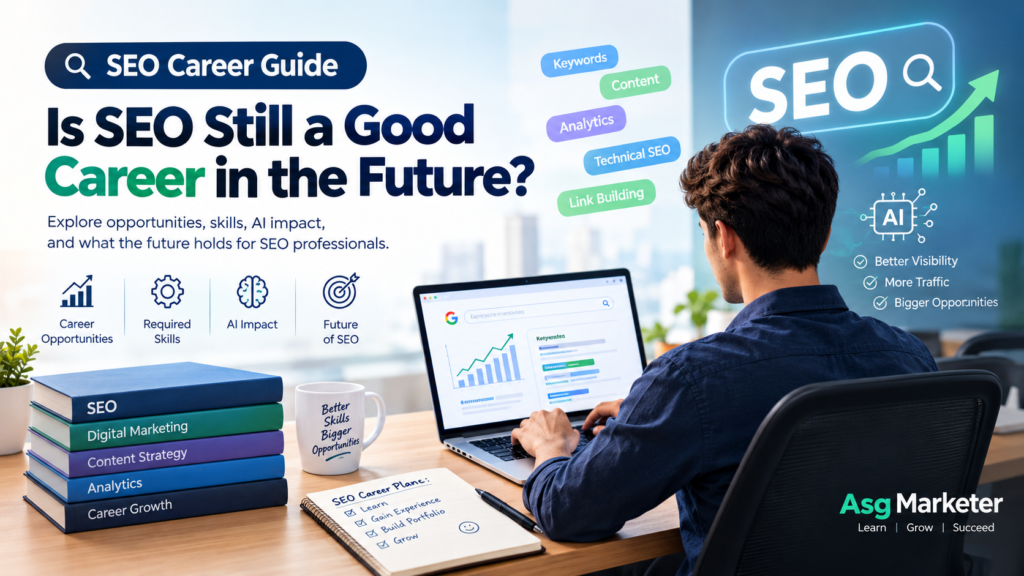

Search Engine Optimization (SEO) has become an important part of digital marketing, helping websites improve their visibility in search engines and attract organic traffic. But with the rapid growth of artificial intelligence, changing search behavior, and new digital marketing technologies, many people are asking: Is SEO still a good career in the future?
The short answer is that SEO is changing, but it remains a valuable digital marketing skill. Professionals who continue learning and adapt to new search technologies can find opportunities in SEO, content marketing, technical optimization, analytics, and related digital marketing fields.
What Is an SEO Career?
An SEO career involves improving websites so they can appear more prominently in search engine results. SEO professionals work on different areas, including keyword research, content optimization, technical SEO, link building, website performance, and search analytics.
Depending on their role, SEO professionals may work as:
- SEO Specialists
- SEO Analysts
- Technical SEO Specialists
- SEO Content Strategists
- SEO Managers
- SEO Consultants
- Digital Marketing Specialists
- SEO Account Managers
Some professionals work for digital marketing agencies, while others work in-house for companies or operate as freelancers and consultants.
Is SEO Still Relevant in the Future?
SEO is still relevant because people continue to use search engines to discover information, products, services, software, businesses, and solutions.
However, the way people search is changing. Search engines are incorporating AI-generated answers, conversational search, visual search, and other technologies. This means SEO professionals need to understand more than traditional rankings.
Modern SEO increasingly involves:
- Search intent
- Helpful and reliable content
- Technical website performance
- Structured data
- Brand visibility
- AI search optimization
- User experience
- Content quality
- Entity and topical relevance
- Website authority
Therefore, the future of SEO is not simply about adding keywords to webpages. It is increasingly about helping websites become useful, accessible, trustworthy, and understandable to both users and search systems.
How AI Is Changing SEO
Artificial intelligence is one of the biggest changes affecting SEO. AI tools can help marketers with keyword research, content ideas, competitor research, content outlines, data analysis, and repetitive tasks.
However, AI does not eliminate the need for SEO professionals. Instead, it changes the skills that professionals need.
For example, an SEO specialist can use AI to analyze large amounts of information quickly but still needs human judgment to determine search intent, evaluate content quality, understand a business’s audience, and develop an effective strategy.
SEO professionals who learn how to use AI responsibly can potentially become more productive and focus more time on strategy, analysis, and optimization.
Skills You Need for an SEO Career
If you want to build a long-term career in SEO, developing a broad skill set can be useful.
1. Keyword Research
Understanding what users search for is a fundamental SEO skill. SEO professionals should know how to identify relevant keywords, analyze search intent, and evaluate competition.
2. Content Optimization
SEO involves creating and improving content that answers users’ questions. Professionals should understand headings, internal linking, content structure, readability, search intent, and topical coverage.
3. Technical SEO
Technical SEO focuses on how search engines crawl, understand, and index websites. Important areas include:
- XML sitemaps
- Robots.txt
- Canonical tags
- Redirects
- Page speed
- Mobile usability
- Structured data
- Indexing
- Crawlability
4. Analytics
SEO professionals need to understand data. Tools such as Google Search Console and analytics platforms can help identify traffic patterns, search queries, indexing problems, and content performance.
5. Link Building and Digital PR
Backlinks can contribute to website authority when they come from relevant and trustworthy sources. Modern link-building strategies should focus on earning useful, relevant links rather than simply collecting large numbers of backlinks.
6. AI and Emerging Search Technologies
Learning how AI affects search and content discovery can help SEO professionals remain competitive. Understanding AI-assisted workflows, AI search experiences, and emerging optimization techniques can become increasingly useful.
Can SEO Be a Good Career for Beginners?
SEO can be an accessible field for beginners because many fundamental concepts can be learned through online resources and practical projects.
A beginner can start by learning:
- SEO fundamentals
- Keyword research
- On-page SEO
- Technical SEO basics
- Content optimization
- Google Search Console
- Analytics
- Competitor analysis
- Link-building principles
- AI-assisted SEO workflows
Creating a small website or practicing SEO on an existing project can also provide practical experience.
Instead of focusing only on certificates, beginners can build a portfolio showing keyword research, content optimization, technical audits, and measurable improvements.
Freelancing and Remote SEO Opportunities
SEO is also relevant to freelance and remote work. Businesses in different industries need help with organic search visibility, website optimization, content strategy, and technical SEO.
Freelancers may offer services such as:
- SEO audits
- Keyword research
- On-page optimization
- Technical SEO
- Local SEO
- Content strategy
- Competitor analysis
- Link-building campaigns
- Monthly SEO management
Agencies such as Asg Marketer can also provide an example of how SEO fits into a broader digital marketing environment, where SEO can work alongside content marketing, website optimization, and other online marketing strategies.
How Much Can an SEO Professional Earn?
SEO income varies considerably depending on location, experience, specialization, employment type, industry, and client base.
Entry-level professionals may begin with junior SEO or digital marketing roles. With experience, professionals can move into specialist, strategist, manager, consultant, or agency positions.
Freelancers and consultants may have different earning models, including hourly rates, project-based fees, or monthly retainers.
Rather than focusing only on salary, people considering SEO as a career should also consider the opportunity to develop transferable skills in analytics, marketing, content, technology, and business strategy.
Future of SEO: What Should Professionals Learn?
The future of SEO is likely to involve a combination of traditional search optimization and emerging digital experiences.
SEO professionals should consider developing skills in:
- AI-assisted research and analysis
- Technical SEO
- Content strategy
- Search intent analysis
- Structured data
- Analytics and reporting
- User experience
- Local search
- Digital PR
- Brand building
- AI search optimization
The ability to adapt may become one of the most important skills for long-term success.
Is SEO a Good Career in the Future?
SEO continues to evolve alongside search engines and user behavior. While some traditional SEO techniques may become less effective Asg Marketer the broader need to make websites discoverable, understandable, useful, and trustworthy remains relevant.
A successful SEO career therefore requires continuous learning. Professionals who rely only on old tactics may struggle as search technology changes, while those who understand data, content, technology, AI, and user intent can adapt their strategies.
Final Thoughts
SEO is not disappearing; it is evolving. The future of SEO will likely involve more AI, advanced search experiences, stronger emphasis on content quality, and greater integration with broader digital marketing strategies.
For beginners, SEO can be a practical career path for developing skills in marketing, technology, analytics, and content. For experienced professionals, learning new technologies and expanding beyond traditional SEO can help maintain their relevance.
If you are interested in digital marketing, learning SEO fundamentals and gaining hands-on experience can be a useful starting point for exploring the field.
FAQs
Yes. SEO continues to evolve and remains a relevant skill within digital marketing as businesses need organic visibility and search optimization.
Yes. Beginners can start by learning keyword research, on-page SEO, technical SEO, content optimization, and analytics.
AI is changing SEO workflows, but professionals are still needed for strategy, analysis, technical decisions, search intent, and business-focused optimization.
Important skills include keyword research, content optimization, technical SEO, analytics, competitor research, link building, and understanding AI-powered search.
Yes. SEO professionals can offer services such as SEO audits, keyword research, content optimization, technical SEO, and monthly SEO management.